indexpopvault
Training Centre
Scenario Training
Pedestrian Routes
← Back to Training Scenarios
Detailed Explanation
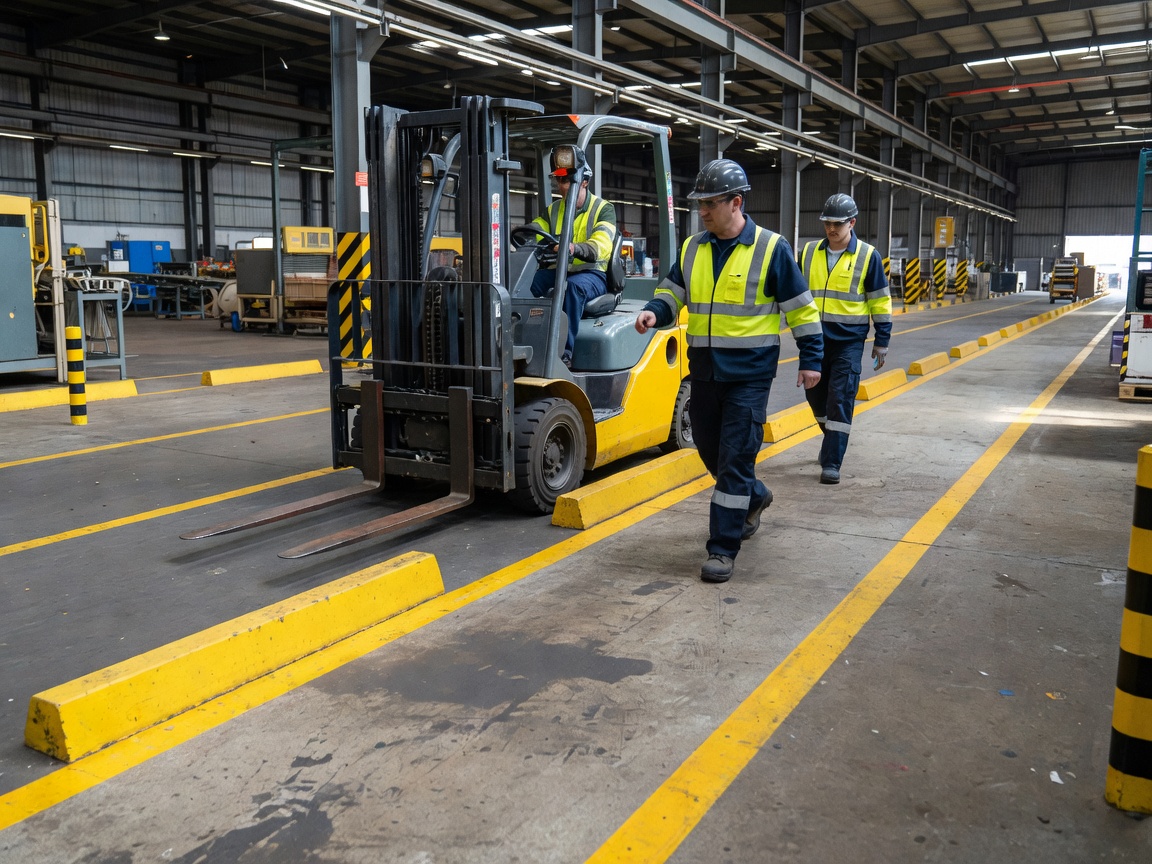
The interaction between mobile heavy machinery and unarmoured foot traffic is the leading cause of severe incidents in industrial settings. Navigating areas where pedestrian routes intersect with transit lanes requires constant vigilance and proactive defensive driving.
Workplace Context
Facilities utilize painted walkways, physical barriers, and warning lights to separate traffic, but operators still routinely share space with administrative staff, pickers, and visitors. Blind corners, doorways, and shift changes present sudden, unpredictable variables.
Training Considerations
Operators are trained to anticipate pedestrian behavior, recognizing that people often misjudge a forklift's speed or its rear-swing arc. The curriculum focuses on maintaining exclusion zones, establishing eye contact before moving, and using audible warnings effectively without causing noise fatigue.
Practical Focus
- Pedestrian awareness and predicting foot-traffic movement
- Visibility checks and managing blind spots at intersections
- Controlled travel speeds in designated shared zones
Frequently Asked Questions
Who has the right of way, the forklift or the pedestrian?
While facility policies vary, safety training universally dictates that the operator must yield to pedestrians to prevent injury, regardless of designated right-of-way rules.
How should an operator handle a blind doorway?
The standard procedure is to slow down to a crawl, sound the horn briefly but clearly, and check mirrors before crossing the threshold.
Related Training Services
Enhance your operational competence by exploring our full range of training subjects.
View Full Directory →