indexpopvault
Training Centre
Scenario Training
Manoeuvring Areas
← Back to Training Scenarios
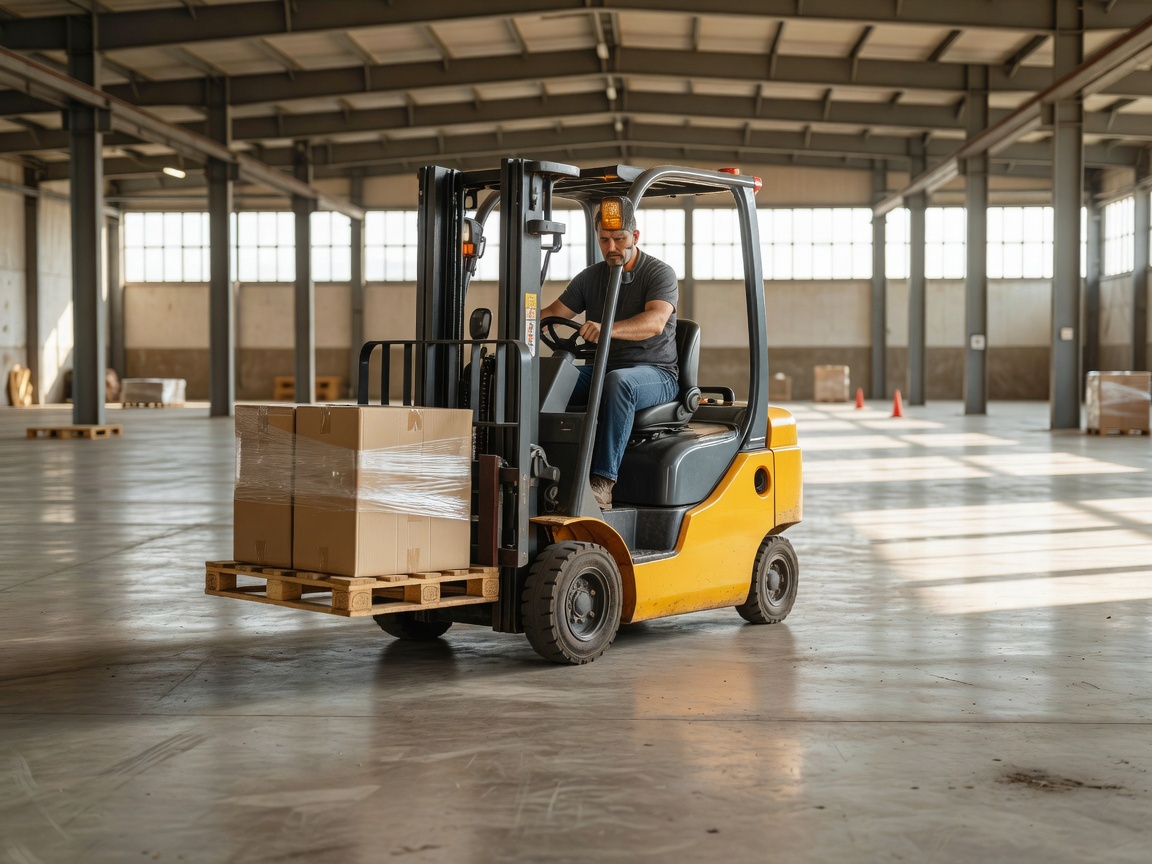
Detailed Explanation
Forklifts are fundamentally different from standard road vehicles; they steer from the rear axle. This design allows for incredibly tight turning circles but creates a pronounced rear-end swing that requires significant spatial adjustment from the operator.
Workplace Context
Before entering high-stakes environments like warehouse aisles or loading docks, operators utilize open manoeuvring areas. These zones, often marked with cones and simulated boundaries, provide a safe, controlled environment to build muscle memory and understand the specific movement dynamics of the vehicle.
Training Considerations
Training focuses on fluid coordination between steering, acceleration, and braking. Operators practice navigating chicanes, reversing into simulated bays, and executing 90-degree turns. The goal is to develop an intuitive sense of the vehicle's footprint and how it tracks through a turn.
Practical Focus
- Steering control and adapting to rear-wheel steering physics
- Smooth turning execution to maintain load stability
- Spatial positioning and accurate alignment with targets
Frequently Asked Questions
Why is reversing often practiced more than forward driving?
Rear-wheel steering makes a forklift highly maneuverable when reversing into tight spaces. Additionally, when carrying bulky loads, driving in reverse is the primary safe mode of travel, requiring exceptional control.
What is tail swing?
Tail swing is the rapid outward movement of the forklift's rear end when turning. Managing tail swing is a critical skill to prevent structural damage and pedestrian injuries.
Related Training Services
Enhance your operational competence by exploring our full range of training subjects.
View Full Directory →